
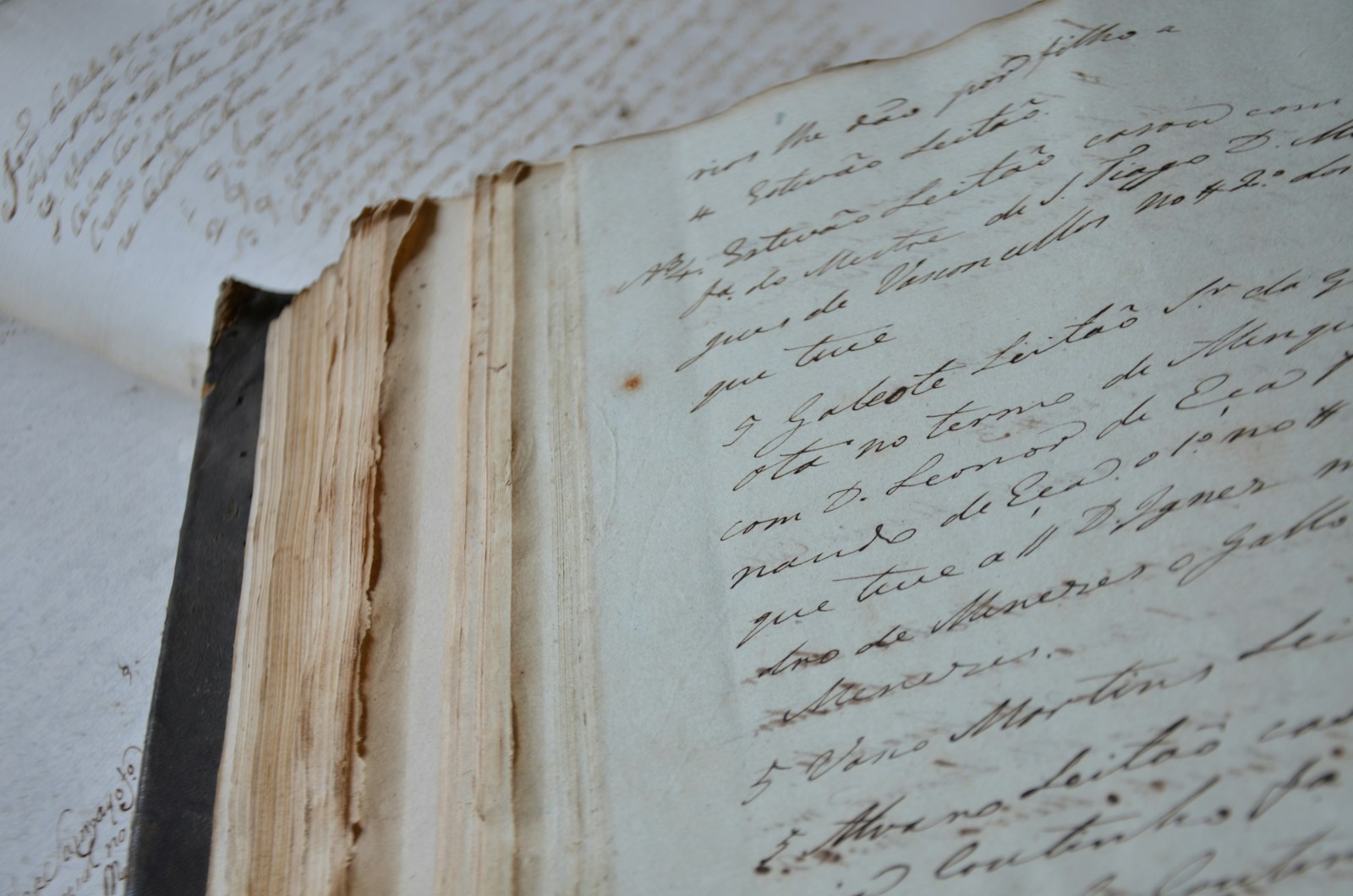
Hidden in Yale University’s rare book collection is one of the world’s most enduring puzzles: a 240-page medieval manuscript comprising bizarre illustrations and text in an undeciphered language that has eluded decoding by anyone to date. The Voynich Manuscript has been puzzling cryptographers, linguists, and codebreakers for over a century.
Carbon-dated to the early 1400s, the enigmatic coded manuscript features unknown plants, nude figures bathing in green ponds, and astronomical charts with text that doesn’t fit into any known linguistic pattern. Despite numerous theories and computer analyses using modern tools, the manuscript stubbornly refuses to reveal its secrets.
Why Is the Voynich Manuscript Undeciphered Language So Perplexing
It has been named the Voynich manuscript after Wilfrid Voynich, the book dealer who acquired it in 1912. The manuscript contains some 170,000 characters of extraterrestrial script. The manuscript reads left-to-right in an alphabet of 20-30 distinct symbols that repeat in patterns suggesting real language rather than gibberish nonsense.
The illustrations divide the manuscript into distinct sections: botanical drawings of unidentified plants, astronomical diagrams featuring zodiac symbols, biological diagrams with miniature nude female figures connected by tubes, and pharmaceutical-style recipes with labeled jars. None of the illustrations match known medieval conventions, further contributing to the enigma.
- Standout features that baffle researchers:
- No mistakes or corrections in 240 pages of unbroken text
- Statistical characteristics of natural language, but in no recognizable language
- Strange vocabulary with terms that appear only in specific parts
- No mathematical notation or number system of any sort
World War II code-breakers like those who cracked the Enigma machine have attempted to decipher it with no luck. Modern AI algorithms have also failed to detect any meaningful patterns.
Read More: Words You’re Pronouncing Wrong Without Realizing It
Leading Theories Concerning This Mysterious Coded Manuscript
Scientists remain split over whether the Voynich Manuscript contains real information or an ingenious hoax. The cipher theory suggests that it’s a coded text protecting dangerous knowledge, such as alchemy or herbal medicine, from the ruling church authorities. The proponents presented consistent handwriting and linguistic patterns as evidence of a hidden meaning.
The constructed script theory proposes a man-made script by researchers. Renaissance researchers sometimes invented philosophical languages in an effort to express ideas more ideally than Greek or Latin.
In 2019, researcher Gerard Cheshire proposed the use of proto-Romance language in the script, although peer review was swift in refuting his analysis. These claims have surfaced periodically, each of which has been refuted at some point.
The hoax theory posits that medieval scam artist Anthony Ascham, or another such faker, wrote nonsense to pass off as an exotic manuscript. Statistical analysis reveals that the text has lower entropy than natural languages, which supports this view. But the very scale of effort—hand-drawing the hundreds of illustrations and maintaining pseudo-script for 240 pages—makes it an unlikely endeavor for a forgery.
Read More: The Weird Science Behind Common Optical Illusions
Why New Technology Can’t Decipher This Mysterious Writing System
Computer algorithms excel at patterns, yet the Voynich Manuscript’s unknown script defeats computer analysis. Machine learning requires comparison data sets—known samples to generate patterns. Without known translations or comparable texts, AI has nothing to compare.
The manuscript may use more than one level of encryption, substitution ciphers, or new language forms outside of computational models. Other researchers have suggested that the text may be glossolalia—spiritually generated language intended to convey no literal meaning. Short of the discovery of a Rosetta Stone equivalent or the original cipher key, this 600-year-old mystery will remain intriguing.
The Voynich Manuscript is the world’s oldest unsolved linguistic mystery, an undeciphered language that has baffled scholars from the Middle Ages to today’s supercomputers. Nobody knows if it contains lost knowledge, is an elaborate hoax, or the last trace of a dead language. The manuscript is evidence that some secrets baffle even our best analyzing machines.